
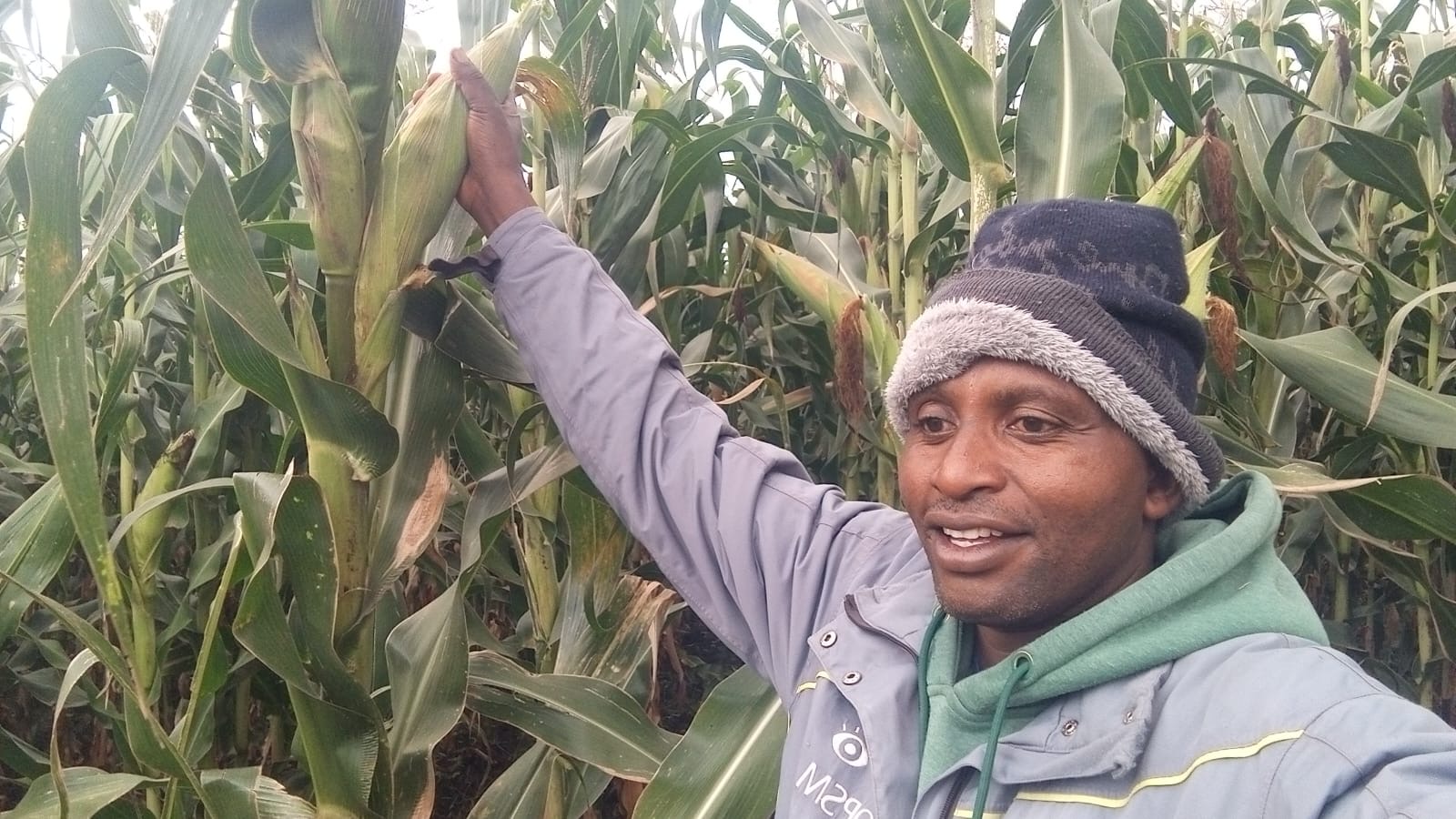
Jambo, maize farmers. Fertiliser is one of the largest bills in a maize programme, but buying it is only the first decision. Soil condition, seed quality, placement, moisture and the timing of field work decide whether young roots can reach what you paid for. Before sowing, put the whole programme on one page and prepare the root zone to use it.
Plan maize soil preparation, seed, fertiliser placement, moisture and cost per acre before sowing so every input has a better chance to work.
Buy HumiBakt for 1 acre →Start with the field, not the fertiliser bag
Walk each maize block before finalising the programme. Check surface crusting, compaction, drainage, residue cover and places that dry or remain wet. Dig at several points and record the previous crop and last season’s weak areas.
Where possible, use a representative soil test and local agronomic advice. A result can guide pH correction and nutrient decisions, while the field walk shows physical problems that a laboratory sample may not reveal.
Match seed and acreage to a real sowing window
Confirm the variety, seed source, quantity, planting depth and target plant population for each block. Record the supplier and delivery date. Seed waiting for an unready field—or a ready field waiting for seed—puts the whole programme at risk.
Check the latest Kenya Meteorological Department guidance and actual soil moisture for your location. County and sub-county conditions differ; use a planting window, then make the final decision in the field.
Source: HumiBakt Africa: current Kenya product offer and commercial guarantee, updated September 2026 (internal offer file)
Place nutrients where young roots can use them
Write down the product, rate, placement and timing for every nutrient input. Follow crop and soil advice, keep fertiliser away from direct seed contact where required, and calibrate equipment before the full field is treated.
Protecting fertiliser investment means limiting runoff and erosion, managing compaction and placing inputs into a root zone with suitable moisture and air. HumiBakt supports the biological and humic environment; it does not replace a maize nutrition programme.
Calculate the full programme per acre
List seed, land preparation, fertiliser, HumiBakt, crop protection, labour, water, transport, harvesting and drying or marketing costs. Add payment and delivery dates so cash and field operations stay aligned.
The current retail price of HumiBakt is KES 3,500 per acre, including 16% VAT. For larger acreage, confirm the current quotation, stock and delivery plan before treating a budget as an order. Record any application cost separately.
Schedule HumiBakt before sowing
For the pre-plant soil programme, the current guidance is 80 g HumiBakt mixed with 80 litres of clean water per acre and applied evenly to suitably moist soil according to the current pack instructions. Prepare the water, equipment, labour and responsible person in advance.
Keep HumiBakt out of the same tank as synthetic crop-protection chemicals. The carrier water is not irrigation, and the application does not replace correction of drainage or serious compaction.
Use research carefully—and measure your own field
An IUNG-PIB maize trial in Poland reported higher green and dry biomass in treated strips and measured soil indicators over two seasons. It was conducted on a Polish light-loam site and the crop was harvested for biomass, so it is not a Kenyan grain-yield promise.
Source: IUNG-PIB: Assessment of the agricultural usefulness of HUMIBAKT, field trial report, April 2025 (Polish research file supplied by HumiBakt Africa)
Set up the comparison before the planter moves
Choose a representative HumiBakt area and a fair comparison area. Keep variety, sowing date, fertiliser, crop protection and field operations as similar as practical. Mark the boundary and photograph fixed points.
Record emergence and uniformity, inspect roots at agreed dates, and weigh the final grain from measured areas. Add every extra cost. Your own marketable yield and margin are stronger decision data than appearance alone.
Copy this maize plan into your notebook
Field and county: ____ | Acres: ____ | Variety and seed source: ____ | Sowing window: ____
Soil observations and test/advice: ____ | Preparation and drainage work: ____ | Fertiliser rate, placement and timing: ____
HumiBakt quantity and application date: ____ | Water, equipment and responsible person: ____
Input order and delivery dates: ____ | Full budget per acre: ____ | Comparison area and review dates: ____
Plan acreage and supply before sowing pressure begins
Send our team your maize acreage, county or sub-county, current fertiliser programme and expected sowing date. We can discuss the field plan, a measured comparison and the HumiBakt quantity required.
Confirm the quotation, payment, stock and delivery before putting product into the work schedule.
Questions from farmers
Does HumiBakt replace maize fertiliser?
No. Keep a crop nutrition programme based on soil information and local agronomic advice. HumiBakt supports the biological and humic environment in the root zone.
How much HumiBakt is used before sowing?
The current soil guidance is 80 g mixed with 80 litres of clean water per acre, applied evenly to suitably moist soil according to the pack instructions.
Does the Polish IUNG maize result predict my grain yield?
No. It was a Polish field trial on maize harvested for biomass. Use it as supporting research and measure a fair comparison under your own Kenyan field conditions.
What details should I send HumiBakt Africa?
Your county or sub-county, maize acreage, current fertiliser programme and expected sowing date.
Prepare your soil now
Start the crop with living soil
Put HumiBakt’s humic substances and beneficial Bacillus bacteria into the root zone before planting. HumiBakt costs KES 3,500 per acre, including 16% VAT. Order online now or buy with guidance from your local FSC.
Sources & further reading
Research findings are reported with their limits. Product information, field observations and controlled results are kept separate.
- HumiBakt Africa: product and application guide
- USDA NRCS: Soil Health on Cropland
- HumiBakt KEPHIS registration dossier and technical documentation (internal product file)
- IUNG-PIB: Assessment of the agricultural usefulness of HUMIBAKT, field trial report, April 2025 (Polish research file supplied by HumiBakt Africa)
- HumiBakt Africa French bean field archive (Kenyan field material; not a controlled trial)
- HumiBakt Africa: current Kenya product offer and commercial guarantee, updated September 2026 (internal offer file)
- Kenya Meteorological Department: local forecasts and agrometeorological guidance
- USDA NRCS: Soil Health Assessment
- KALRO: Potato Technologies, Innovations and Management Practices
- KEPHIS: Seed Certification Resources