
Pod quality is where a field problem becomes a sales conversation. If dark, sunken marks appear on beans, record them while the crop is still traceable to its field. Anthracnose is one possible explanation, but the next step is to establish what is actually happening.
Marks on bean pods deserve attention before grading day. A practical beans guide from HumiBakt Africa.
Buy HumiBakt for 1 acre →What to look at in your field
Bean anthracnose can produce dark, sunken lesions on pods. The disease is associated with Colletotrichum fungi. Symptoms and crop history help guide identification; neither a single photograph nor a generic “fungal disease” label establishes the cause.
Keep affected and apparently unaffected samples identified by field and date for assessment. Record whether the crop is destined for dry grain or fresh pods. Quality measurements should match the market: the buyer’s requirements for French beans are not identical to those for dry beans.
Three actions for your next field discussion
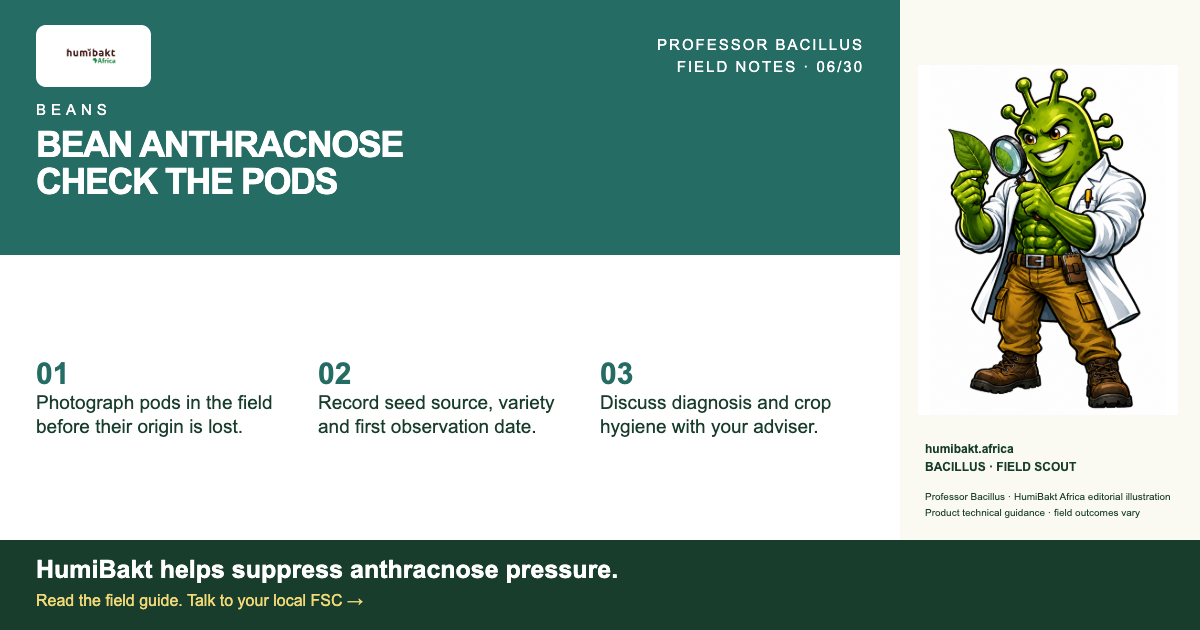
1. Photograph pods in the field before their origin is lost.
2. Record seed source, variety and first observation date.
3. Discuss diagnosis and crop hygiene with your adviser.
Where HumiBakt fits
HumiBakt helps suppress anthracnose pressure. Its beneficial microorganisms compete with undesirable microorganisms and support the plant’s natural defence mechanisms.
This disease-specific statement comes from HumiBakt’s Zambia seed-material technical document, page 2. It is product technical information, not a mapped Kenya field trial or a guarantee of the result on your farm.
HumiBakt is a microbiological soil fertiliser, not a plant protection product. Follow the current pack instructions and use it within a locally appropriate crop programme. Outcomes depend on the crop, field conditions and application.
Source: HumiBakt disease register and Zambia seed-material technical document, page 2: product technical source, not a mapped formal crop trial
Turn the observation into a crop plan
Send your bean crop type, county, acreage and planting date to your local FSC. Bring the field observations described here so you can discuss a practical beans programme.
Questions from farmers
Can pod appearance alone confirm anthracnose?
No. It can suggest the disease, but an adviser may need additional observations or diagnostic testing.
How can my FSC help me plan the next step?
Send your bean crop type, county, acreage and planting date to your local FSC. Bring the field observations described here so you can discuss a practical beans programme.
Prepare your soil now
Start the crop with living soil
Put HumiBakt’s humic substances and beneficial Bacillus bacteria into the root zone before planting. HumiBakt costs KES 3,500 per acre, including 16% VAT. Order online now or buy with guidance from your local FSC.
Sources & further reading
Research findings are reported with their limits. Product information, field observations and controlled results are kept separate.
- University of California IPM: bean anthracnose — general disease background; not evidence of HumiBakt efficacy
- HumiBakt disease register and Zambia seed-material technical document, page 2: product technical source, not a mapped formal crop trial
- HumiBakt Africa: product application guidance
- French Beans: Prepare the Seedbed and Plan for Marketable Yield