
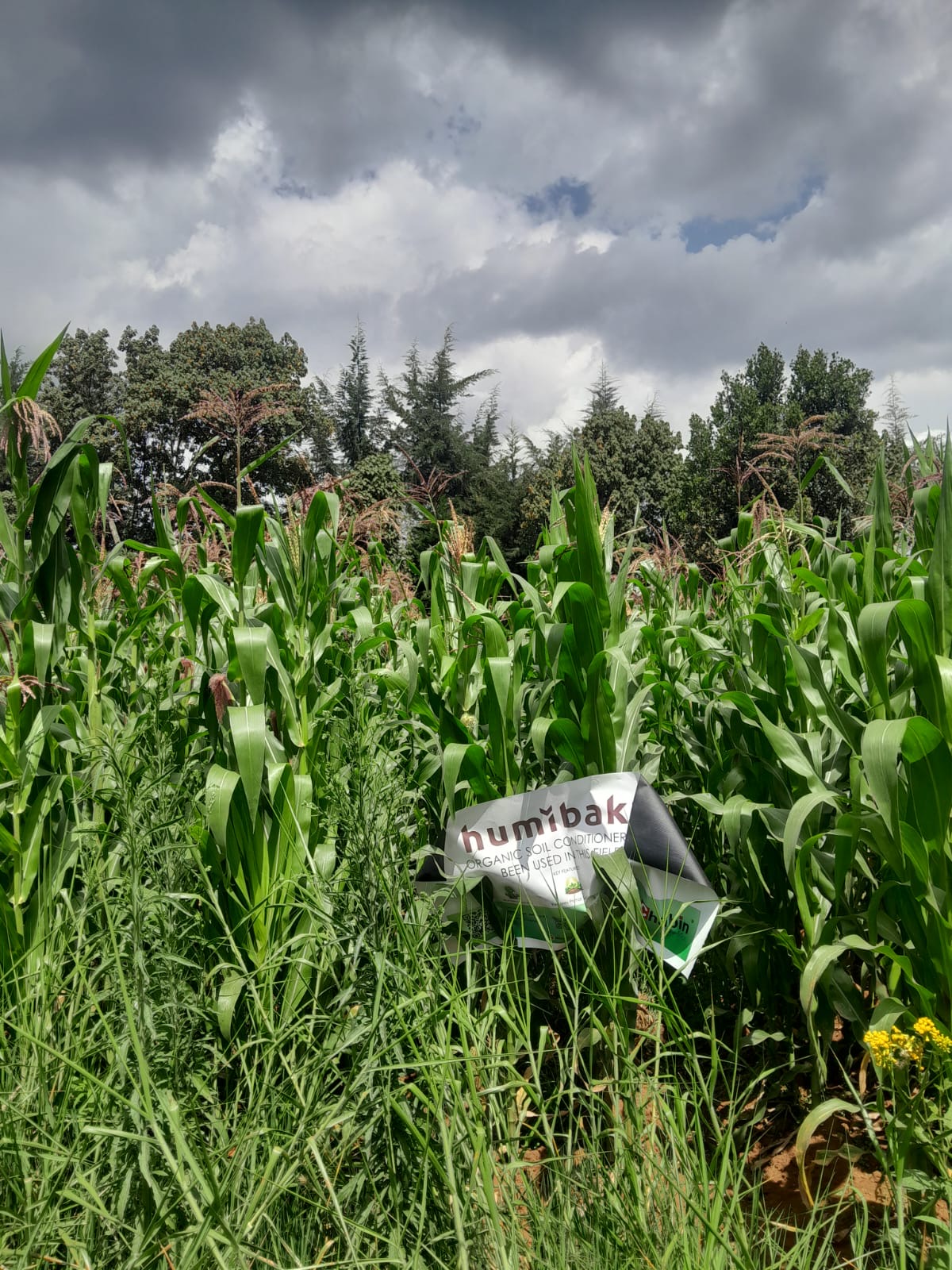
Jambo, farmers. The first green rows are encouraging, but early appearance is not yet a yield or profit result. Return to the areas you marked before planting, use the same counting points and record what actually happened. Good early records help you correct field operations now and make a stronger acreage decision after harvest.
Return to the same marked areas after planting to count emergence, compare uniformity, inspect roots and protect the records needed for a sound harvest decision.
Buy HumiBakt for 1 acre →Return to the original map and fixed points
Use the pegs, GPS points or field sketch created before application. Confirm which area received HumiBakt and which is the comparison. Check the operator record, application date, quantity, water volume and treated acreage.
If the boundary was crossed or one area received a different field operation, record it now. Do not wait until harvest and rely on memory. A known limitation is more useful than a clean-looking but inaccurate story.
Count emergence instead of judging from the road
Choose several fixed lengths of row or measured quadrats in each area. Count emerged plants at crop-appropriate times and return to the same points. Record gaps, delayed emergence and the date of each count.
Compare plant population and uniformity, not only leaf colour. Seed quality, planting depth, moisture, temperature, soil structure and field operations can all affect emergence, so avoid assigning every difference to one input.
Source: HumiBakt Africa French bean field archive (Kenyan field material; not a controlled trial)
Inspect roots carefully and consistently
At agreed sample points, lift the same number of plants from the treated and comparison areas. Note root depth, branching, visible restriction, soil attached to roots and whether the sample came from a compacted, wet or dry zone.
Use photographs from the same distance with a scale or ruler. Return plants only when the crop and sampling method allow it; otherwise keep the sample small and document the removed area. Early root observations are supporting evidence, not a harvest result.
Check the soil around the young crop
Record surface crusting, ponding, runoff, cracks, erosion and moisture below the surface. Compare the same soil type and position in the field. A high spot and a low spot should not be treated as equivalent samples.
Where irrigation is used, record the timing and amount as accurately as practical. Where rainfall drives the crop, record the event and field condition. The water used to carry HumiBakt during application was not the crop’s irrigation requirement.
Source: HumiBakt Africa French bean field archive (Kenyan field material; not a controlled trial)
Protect the fairness of the comparison
Keep variety, fertiliser, crop protection, weeding, water and other field operations as equal as practical. Write down every operation by date, rate, area and responsible person.
If one area needs a corrective action, protect the crop first and record the difference. Do not avoid necessary agronomy just to preserve a perfect comparison; explain how the intervention affects interpretation.
Record unusual symptoms without guessing the cause
Photograph and map yellowing, wilting, damage, missing plants or unusual growth. Compare where the pattern begins and whether it follows soil zones, water movement, machinery or the treatment boundary.
Do not diagnose a cause from appearance alone. Seek crop-appropriate agronomic or laboratory support where needed. The record should separate what was observed from what was later confirmed.
Use these ten checks
1. Emerged plant count. 2. Gaps and uniformity. 3. Root depth and branching. 4. Visible root restriction. 5. Soil attached to roots.
6. Surface crusting. 7. Ponding, runoff or erosion. 8. Moisture at the same depth. 9. Dated field operations and unusual symptoms. 10. The harvest plan for measured marketable yield and full costs.
Prepare now for the harvest decision
Keep treated and comparison harvests separate. For maize, potatoes or French beans, measure the same known area and record total and marketable produce, quality, rejects and selling price. For repeated harvests, record every pick.
Add HumiBakt, application, extra harvesting, grading, packaging, transport and selling costs. Early growth can guide management, but the final acreage decision needs marketable yield, full cost and profit per acre.
If your field is not planted yet, use the delay well
Do not copy the after-planting checklist onto an unmarked field. First create the treated and comparison areas, record baseline conditions, confirm seed and input delivery, and agree on application and planting dates.
Share your crop, county or sub-county, acreage and expected planting date with your FSC or the HumiBakt team. Agree on fixed observation points and review dates before the seed enters the ground.
Questions from farmers
When should I count emergence?
Use crop-appropriate timing and local agronomic guidance. Repeat counts at the same marked points rather than relying on one visit or a universal day for every crop.
What is the best early measurement?
There is no single best measure. Combine emerged plant counts, uniformity, roots, soil condition and field-operation records, then connect them to measured marketable yield at harvest.
Does a greener crop prove a higher yield?
No. Colour is an observation. Final conclusions require measured marketable yield, quality, costs and a fair comparison.
What if the treated and comparison areas received different management?
Record the difference immediately and explain it when reviewing the result. The comparison may still be informative, but confidence in attributing the result to HumiBakt is lower.
Prepare your soil now
Start the crop with living soil
Put HumiBakt’s humic substances and beneficial Bacillus bacteria into the root zone before planting. HumiBakt costs KES 3,500 per acre, including 16% VAT. Order online now or buy with guidance from your local FSC.
Sources & further reading
Research findings are reported with their limits. Product information, field observations and controlled results are kept separate.
- HumiBakt Africa: product and application guide
- USDA NRCS: Soil Health on Cropland
- HumiBakt KEPHIS registration dossier and technical documentation (internal product file)
- IUNG-PIB: Assessment of the agricultural usefulness of HUMIBAKT, field trial report, April 2025 (Polish research file supplied by HumiBakt Africa)
- HumiBakt Africa French bean field archive (Kenyan field material; not a controlled trial)
- HumiBakt Africa: current Kenya product offer and commercial guarantee, updated September 2026 (internal offer file)
- Kenya Meteorological Department: local forecasts and agrometeorological guidance
- USDA NRCS: Soil Health Assessment
- KALRO: Potato Technologies, Innovations and Management Practices
- KEPHIS: Seed Certification Resources